

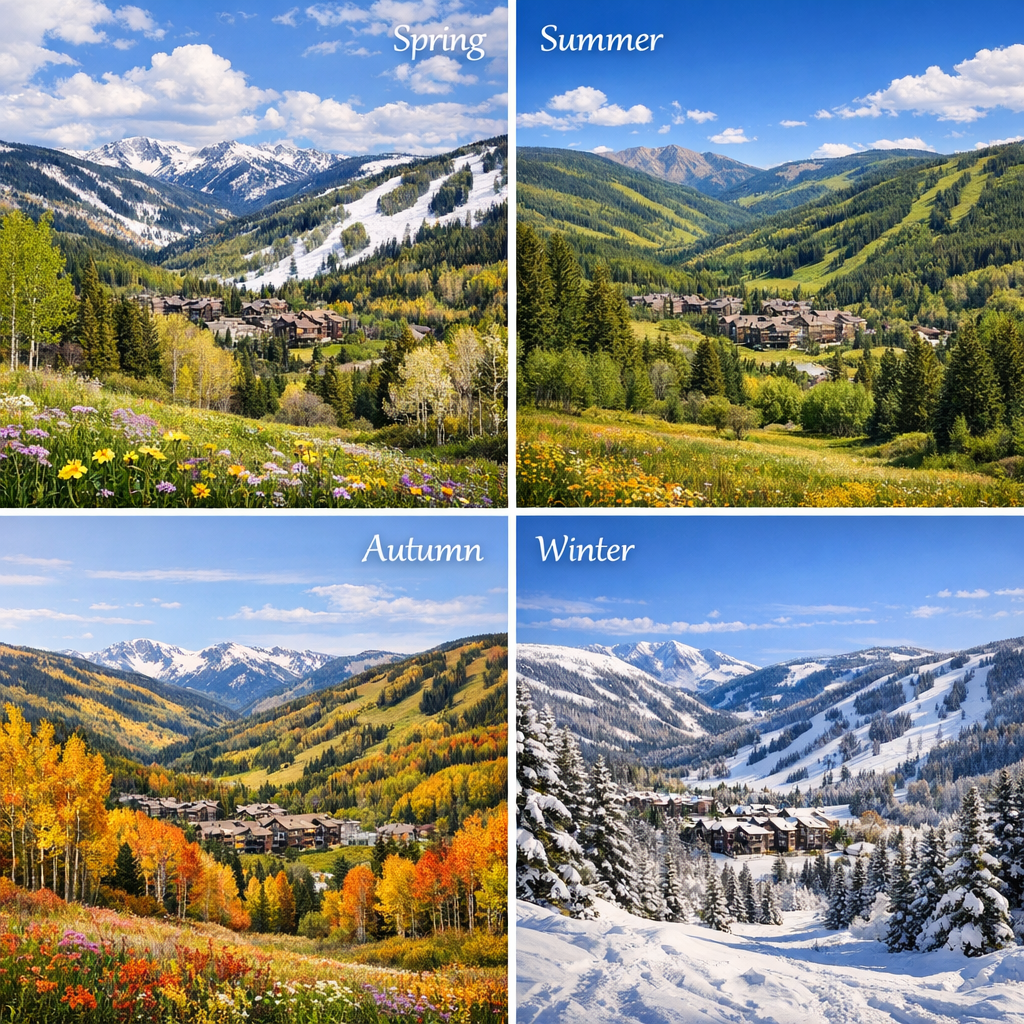
Beaver Creek, Colorado, offers a diverse climate that influences both recreational activities and the natural environment throughout the year. Understanding these seasonal patterns can enhance your experience and appreciation of the area.
Winter: Snow-Covered Slopes and Crisp Air
From November to April, Beaver Creek transforms into a winter wonderland. The resort receives an average annual snowfall of approximately 282 inches, providing excellent conditions for skiing and snowboarding. Temperatures during this period are typically cold, with average highs around 29°F (-2°C) and lows near 7°F (-14°C) in December. The combination of abundant snowfall and well-maintained trails makes it a prime destination for winter sports enthusiasts.
Spring: Transition and Renewal
Spring brings a gradual warming trend, with April being the wettest month, averaging 85 mm of precipitation. This season marks the transition from snow-covered landscapes to blooming flora, offering opportunities for early hiking and wildlife observation as the environment awakens from winter dormancy.
Summer: Mild Temperatures and Vibrant Landscapes
Summers in Beaver Creek are characterized by mild temperatures and lush scenery. Daytime highs range from 68°F to 75°F (20°C to 24°C), while nights cool down to between 41°F and 48°F (5°C to 9°C). Rainfall is modest, with occasional light afternoon showers contributing to the region’s verdant landscapes. These conditions are ideal for outdoor activities such as hiking, mountain biking, and fishing.
Autumn: Crisp Air and Colorful Foliage
Autumn offers crisp air and a palette of vibrant foliage. September sees average high temperatures around 63°F (17°C) and lows near 32°F (0°C). This season is perfect for scenic drives and enjoying the changing colors of the aspen trees before the onset of winter.
Environmental Considerations
Beaver Creek’s high altitude, with the village at approximately 8,100 feet and the summit near 11,400 feet, results in thinner air and increased sun exposure. Visitors should be mindful of altitude-related effects, such as reduced oxygen levels and stronger UV radiation. Staying hydrated, allowing time for acclimatization, and using sun protection are essential for a comfortable visit.
Understanding Beaver Creek’s climate not only enhances recreational planning but also fosters a deeper connection with the natural rhythms of this unique mountain environment.