

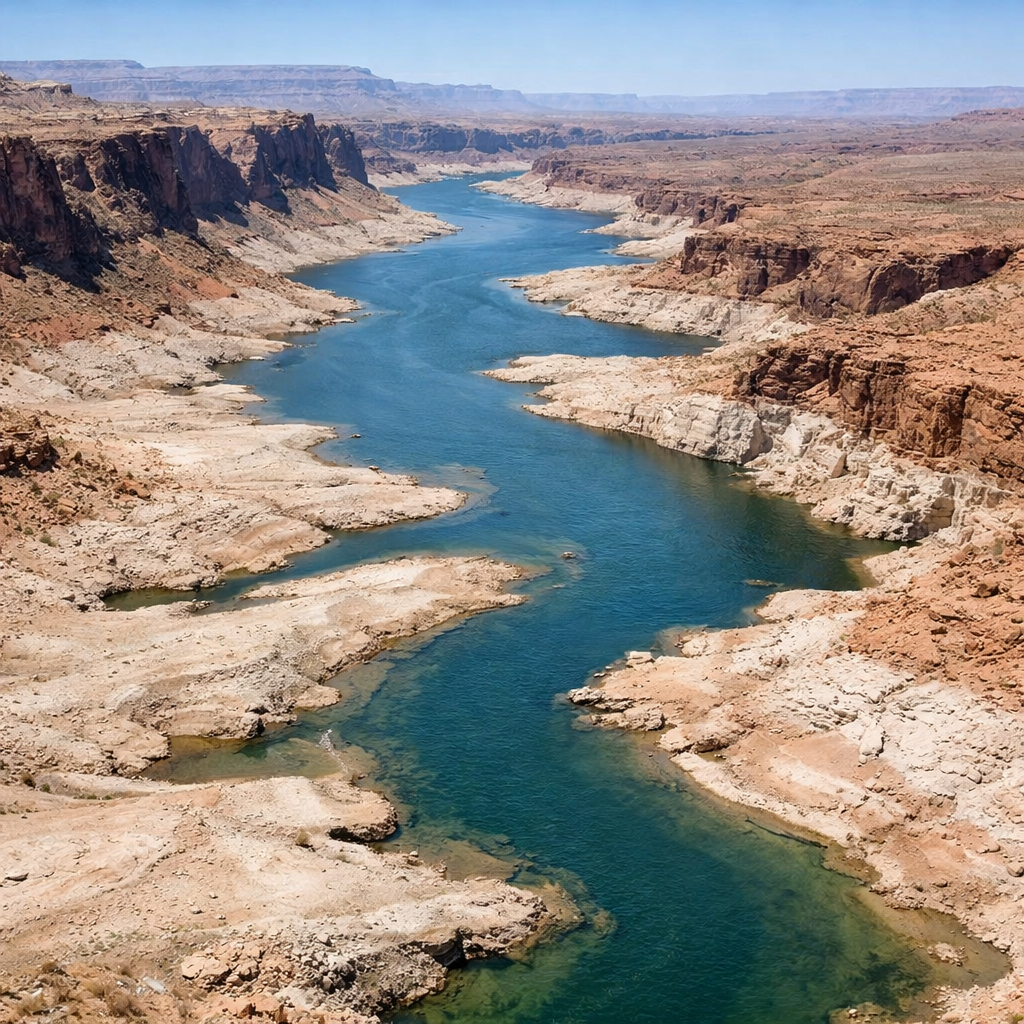
The Colorado River, a vital water source for approximately 40 million people across the Western United States, is experiencing unprecedented declines in water levels. This situation has far-reaching implications for water supply, agriculture, and energy production in the region.
Current State of the Colorado River
Recent reports indicate that the Colorado River’s flow has diminished significantly, leading to concerns about water availability for states that rely on it. Factors contributing to this decline include prolonged drought conditions and increased water demand.
Implications for the Western United States
The reduced water levels in the Colorado River have several consequences:
- Water Supply: Cities and communities that depend on the river for drinking water may face shortages, necessitating conservation measures and alternative sourcing.
- Agriculture: Farmers who utilize the river for irrigation could experience reduced crop yields, impacting food supply and local economies.
- Energy Production: Hydroelectric power plants along the river may generate less electricity, potentially leading to higher energy costs and increased reliance on non-renewable energy sources.
Potential Solutions and Mitigation Efforts
Addressing the Colorado River crisis requires a multifaceted approach:
- Water Conservation: Implementing stricter water usage regulations and promoting conservation practices among residents and industries.
- Infrastructure Improvements: Investing in modernizing water delivery systems to reduce waste and improve efficiency.
- Policy Reforms: Revisiting water rights agreements to ensure equitable distribution and sustainable usage.
Conclusion
The challenges facing the Colorado River underscore the need for collaborative efforts among states, communities, and stakeholders to develop sustainable solutions. By prioritizing conservation, infrastructure improvements, and policy reforms, the Western United States can work towards mitigating the impacts of this water crisis.